
The Covert War Against You
Not a Conspiracy Theory - Just the Facts at Work Against You

Human history is often told as a series of wars between nations, tribes, or ideologies. Yet a more fundamental war is unfolding today - one in which humanity is fighting against itself. The battlefield is not defined by armies or borders, but by the concentration of money, power, and influence in the hands of a small elite. The policies and structures that support this concentration operate as a form of systemic warfare against the vast majority of people. The danger is not only economic or political; it touches the very survival of the species.
Most people, however, are largely unaware that such a war is taking place. They are kept occupied with distractions, polarising conflicts, or matters that, while emotionally charged, do little to shift the fundamental power imbalance. To support the claim that humanity is at war with itself, three key arguments can be developed: first, that extreme centralization of wealth and power constitutes structural violence; second, that the ruling elite actively implement policies that undermine the wellbeing of the majority; and third, that this arrangement endangers long-term human survival by weakening resilience and capacity for collective action.
Most people spend their lives working harder and harder to get ahead, believing that effort and perseverance will eventually be rewarded. Yet the game is far more rigged than it appears. The rules of our economic and political systems are written to favor a tiny minority, ensuring that the harder the majority plays, the further behind they often fall. What is needed is not simply more effort within this broken framework, but a clear understanding of how the system truly operates—and a deliberate, gradual shift toward a better way of living and organising society.
This realisation is also why, many years ago, I chose to leave behind a lucrative career. I could see that success within the existing system too often meant reinforcing the very dynamics I believe are harmful.
Centralisation as Structural Violence
The economist Thomas Piketty has shown that wealth inequality has grown to levels not seen since the late 19th century. A 2024 Oxfam analysis reported that the world's richest 1% now own more wealth than the bottom 95% combined.
Such disparities are not merely a matter of envy or unfairness. They amount to structural violence. Johan Galtung, the peace theorist, defined structural violence as harm that is built into social systems - preventing people from meeting their basic needs or fulfilling their potential.
When wealth is hoarded by a tiny elite, resources are denied to others. Food, healthcare, education, and shelter become conditional on market participation that many cannot sustain. Life expectancy gaps between rich and poor neighborhoods in the same city can stretch into decades. Infant mortality rates, preventable diseases, and inadequate housing are all symptoms of the violence inflicted by inequality. In this sense, the war is not metaphorical but real, though its weapons are economic policies and institutional arrangements rather than guns or bombs.
Policies That Favor the Few
The idea that governments serve all citizens equally is contradicted by the evidence. In study after study, political scientists such as Martin Gilens and Benjamin Page have demonstrated that in the United States, public policy outcomes overwhelmingly reflect the preferences of economic elites and organised business groups, while the views of average citizens have little measurable impact. Similar patterns are visible in other countries where lobbying, corporate financing of political campaigns, or direct revolving doors between industry and government skew decisions.
There are countless examples. Bailouts during the 2008 financial crisis disproportionately shielded large banks and asset holders, while millions of ordinary people lost homes, jobs, or retirement savings. Tax policies increasingly privilege capital gains and inheritance over wages, reinforcing wealth accumulation at the top. Deregulation of industries often benefits corporate profits while externalising costs onto the public in the form of pollution, unsafe products, or wasteful research projects, to name just a few.
If a foreign army imposed such conditions that forced mass unemployment, health crises, or poisoned ecosystems, it would rightly be considered an act of war. Yet when enacted by domestic elites through legal channels, it is normalised as “policy.” The form differs, but the harm is equivalent.
Distraction and Division
For such an arrangement to persist, the majority must remain unaware of their true condition or divided against themselves. Here lies one of the most insidious elements of the war: the deliberate cultivation of distraction.
Media, entertainment, and political rhetoric often focus attention on issues that, while real, do not threaten elite interests. Culture wars, identity conflicts, and partisan rivalries absorb enormous energy. Social media algorithms, optimised for engagement, amplify outrage and division. Meanwhile, the underlying economic structures remain largely unquestioned.
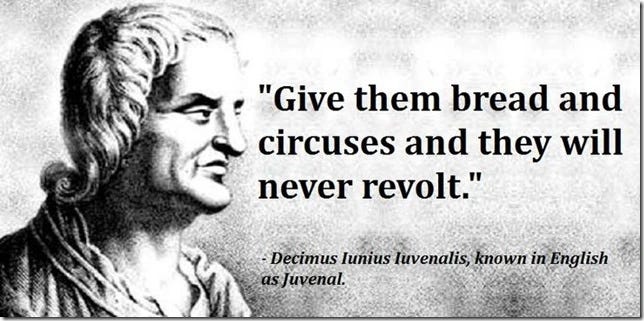
Bread and circuses, as the Romans called it, still applies. Consumer goods, celebrity scandals, and sporting events provide temporary relief or diversion. Even political participation is often channeled into surface level debates rather than systemic reform. The result is a society that fights ferociously over symbols while ignoring the deeper battle over control of resources and institutions.
Threat to Human Survival
Some might argue that inequality is a timeless feature of human society, not a war. Yet the scale and consequences today are unprecedented. Humanity faces collective challenges such as technological disruption and ecological collapse, that require coordinated, equitable responses. The concentration of wealth and power actively undermines this capacity.
Again in countless ways. Pharmaceutical monopolies prioritise profit over patients. Research is concentrated in areas that have even more profit potential, rather than filling genuine gaps in our scientific understanding. Cheaper, safer medicines are overlooked in favour of new dangerous expensive ones. Technology giants consolidate control over information and communication, shaping public discourse in ways that serve their interests.
These dynamics weaken humanity’s resilience. Resources that could be mobilised for survival are instead locked in private accounts, tax havens, or luxury consumption. Decision-making is skewed toward short-term profit rather than long-term planetary stability. The war is existential. Humanity is sabotaging its own ability to adapt to the challenges it faces.
Historical Parallels
History offers many parallels where elites pursued self-interest to the point of societal collapse. In ancient Rome, growing inequality, political corruption, and neglect of the common citizen contributed to the empire’s decline. In pre-revolutionary France, aristocrats resisted reforms until the pressure of popular misery erupted in revolution. The Gilded Age in the United States saw extreme concentrations of wealth, followed by labor uprisings and the eventual introduction of progressive taxation and labor protections.
These cases illustrate a recurring pattern. When elites accumulate too much power at the expense of the majority, social stability breaks down. Today’s global elite are playing a similar game, but on a planetary scale. The difference is that humanity now has nuclear weapons, fragile ecological systems, and a global economy so interconnected that collapse in one region can cascade worldwide. The stakes are higher than ever.
Why Most People Do Not See It
If this is truly a war, why do most people not recognise it? Several answers emerge.
The slow and systemic nature of structural violence makes it less visible than direct physical aggression. A bomb that kills thousands in a day is obvious; austerity policies that shorten lifespans over decades are less so.
The ideological apparatus such as: the media, education, political rhetoric, frames the discussion and keeps people distracted. Wealth is often portrayed as the result of hard work and merit.
The psychological need for hope and stability leads many to avoid confronting uncomfortable truths. To admit one is at war without weapons, strategy, or leadership is destabilising. It is easier to focus on personal goals, family, or entertainment. In this way, the war continues not only because elites wage it, but because most people unconsciously accept it.
Toward Awareness and Response
If humanity is to survive this war with itself, awareness must spread. The recognition that economic policies and concentrated power structures amount to acts of systemic violence is the first step. From there, responses could include greater transparency, stronger democratic institutions, reestablishing the rule of law, using existing legislation to breakup monopolies, universal basic services, and collective action movements that transcend superficial divisions.
Policies designed to channel resources upward while externalising costs downward have to stop. Changing these requires sustained collective action. Something only possible when people understand the true nature of the conflict.
Conclusion
Humanity is at war with itself. The centralisation of money, power, and influence in the hands of a few constitutes structural violence that harms the many. Policies enacted in service of elites act as weapons in this war, undermining wellbeing and resilience. The majority remain unaware, distracted by trivial matters or divided by artificial conflicts. Meanwhile, the capacity of the species to confront existential challenges is weakened.
Recognising this reality is uncomfortable but essential. The war will not be fought with traditional weapons, but with ideas, institutions, and collective choices. Whether humanity can survive and thrive depends on whether it can wake up to the battle already underway and reclaim the resources and power needed for its own survival.
Someone far smarter than I once pointed out that "belief is the enemy of knowledge". This is also true of disbelief.
The COVID-19 pandemic is both the smokescreen and the bludgeon being wielded by the WEF in order to execute a blanket world-wide coup, and if we do not stop this madness we will soon find ourselves locked inside a technological panopticon prison unlike anything seen in history.
The reason we are in this mess running headlong into tyranny is because the majority of people refuse to believe that the controllers would ever do this to us. These eternal optimists appear to be blind to this most fundamental construct of human nature: that power corrupts nearly everyone who wields it—and the globalists - those obscure puppetmaster billionaires you never read about in Forbes and who've spent decades away from the disinfectant properties of sunlight - have indeed become quite corrupted.
I’ve tried and failed countless times to open their eyes to the truth of the situation – that the elites are evil incarnate, and that they want most of us dead, and that they want to enslave the rest of us.
If people still cannot see this given how obvious what is occurring has become, then I do not see how we have any hope of turning the tide.
The normies will just keep on complying and believing what’s being done to them is for the greater good while they drag themselves and the rest of us into totalitarianism.
“The more we do to you, the less you seem to believe we are doing it.”
-Mengele (allegedly)
Wonderful article. I don’t disagree. However, you missed the main force that used to create balance - education. It’s the great leveler.
We didn’t get this hollow having been properly educated. We haven’t been because fascists took over our schools about four decades ago and made sure we’d disrespect the people on this earth here to live a life of loving others rather than compiling wealth - our teachers.
Proof they succeeded at this is teacher whistleblowers have been trying to expose this since 2002 at WhiteChalkCrime.com and EndTeacherAbuse.org to no avail. They got us to disrespect our teachers.
My solution to this state of severe unbalance is to teach people about education since its value is huge. Fascists knew it so they took it from us. And we must get it back or we’ll
Never level the playing field.
Read my book A Graver Danger - a memoir of my teaching experiences. You’ll know how things got this bad if you listen to a teacher.
Great teaching is magical. Depriving us of it is evil. That’s what they did and that’s what we can fix if we start listening to great teachers.